Year of publication
2025
Location
Indonesia (national programme)
Financial supporter:
Plantation Fund, Management Agency (BPDP) grants; partner banks via People’s Business Credit (KUR)
Period of implementation:
2017 to present
Commodities:
Oil palm
Initiator:
Government of Indonesia
Author & Publisher
FACT DIALOGUE
Overview
This case study unpacks People’s Palm Oil Replanting as a finance-plus-field-support model that combines grants, Kredit Usaha Rakyat (KUR) credit, accredited seedlings and cooperative batching tied to ISPO to raise yields without expansion.
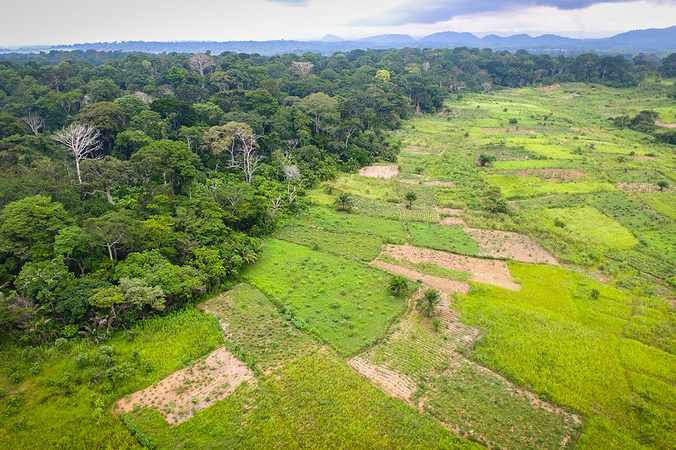
This approach is particularly relevant in a country where palm oil often drives deforestation. By increasing yields on existing land, the model reduces the incentive for forest conversion. Moreover, linking to Indonesian Sustainable Palm Oil (ISPO) ensures a sustainability standard. But challenges remain: the upfront cost of replanting is high; credit risk must be managed carefully; and smallholders may lack bargaining power in cooperatives, so governance and capacity strengthening are vital.
150,000+
smallholders supported
Across 337,000 hectares replanted (2017–2024)
9.4 trillion
disbursed by BPDP + KUR loans (IDR)
Grants and staged credit to reduce upfront costs and match non-productive years
~91,000
hectares replanted in 2023–2024
Targeted approvals using upgraded digital systems and milestone-based disbursements
3
FACT pillars advanced
Smallholder Support | Traceability & Transparency | Trade & Market Development
9
years of implementation
Linking finance, field support and ISPO-aligned traceability into everyday smallholder operations
In practice: Mapping finance into action
The People’s Palm Oil Replanting (PSR) programme captures farmer identity, plot boundaries and planting records. Through grants, KUR credit, and cooperative batching, this data is converted into targeted support: financial disbursement against field milestones, technical assistance on seedling management and planting, and verification of plot eligibility.
Coordination with regional plantation offices, BPDP, partner banks and farmer cooperatives ensures that replanting is feasible for smallholders while meeting ISPO standards. By tying data to tangible outputs, PSR moves from mapping to measurable improvements in productivity.
Why this matters
Indonesia’s programme demonstrates how a national mechanism can raise yields on existing land while supporting smallholders and meeting sustainability requirements.
By combining finance, field support and traceable planting records, it strengthens smallholder capacity, ensures compliance with Indonesian Sustainable Palm Oil (ISPO) standards, and reduces the pressure to clear forests.
This integrated approach mirrors the logic of the FACT Roadmap: mapping unlocks benefits, service delivery improves yields, and alignment with standards ensures verifiable, sustainable outcomes.