Year of publication
2025
Location
Global, with pilots in Honduras, Kenya, Colombia, Laos, Vietnam
Financial supporter:
Federal Ministry for Economic Cooperation and Development (BMZ)
Period of implementation:
2022 to present
Commodities:
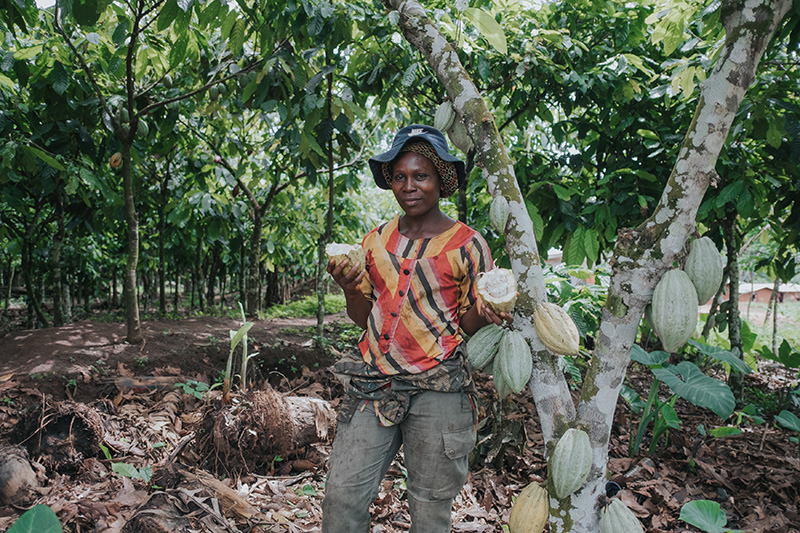
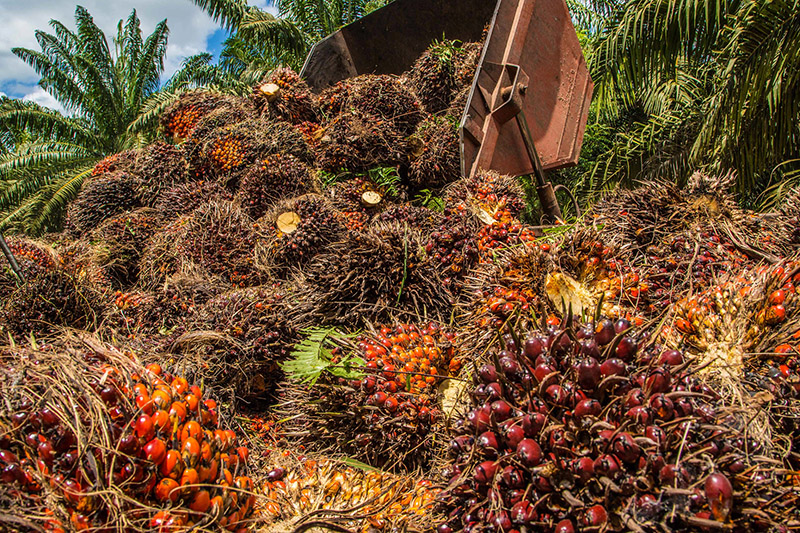
Coffee, cocoa and other agricultural products relevant to EUDR compliance
Initiator:
GIZ
Author & Publisher
FACT DIALOGUE
Overview
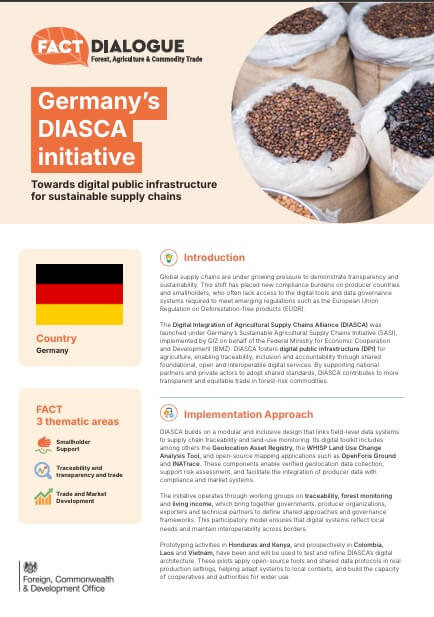
This case study explores Germany’s support for digital public infrastructure (DPI) in sustainable supply chains through two closely linked initiatives.
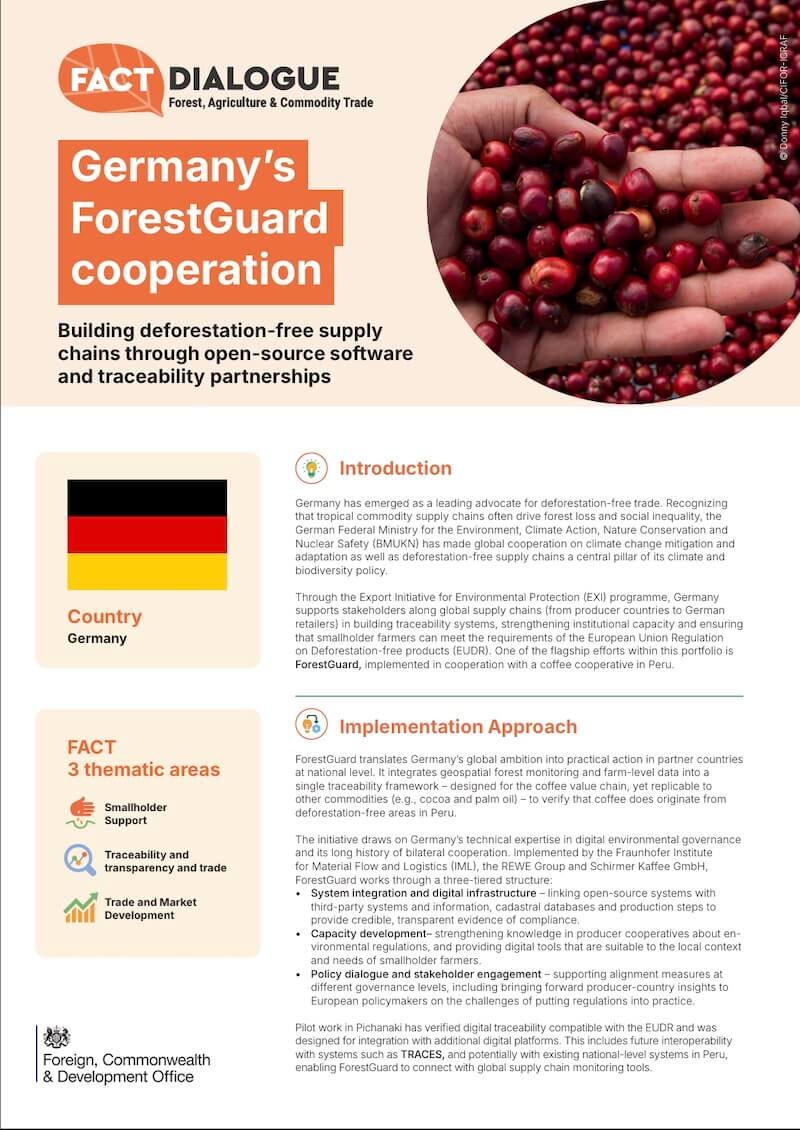
The ForestGuard project developed an open-source, blockchain-based system to help companies and smallholder coffee farmers in Peru comply with the EU Deforestation Regulation (EUDR) by enabling transparent, verifiable data exchange.
Building on this, the Digital Integration of Agricultural Supply Chains Alliance (DIASCA) brings public and private partners together to co-develop open, interoperable digital infrastructure that makes agricultural supply chains more traceable, inclusive, and sustainable across multiple countries — contributing to the objectives of the Forest, Agriculture and Commodity Trade (FACT) Dialogue.
5+
Countries Piloted
Honduras, Kenya, Colombia, Laos and Vietnam
3
FACT Pillars Advanced
Traceability & Transparency | Smallholder Support | Trade & Market Development.
4+
Open-Source Tools Deployed
Geolocation, land-use monitoring, mapping and traceability systems
1
Ready Proof of Concept
Tested in live supply chains with cooperatives and exporters
4
years implementation
From design to pilots to cross-country adaptation
In practice: Honduras coffee pilot
In Honduras, the DIASCA approach enabled farm-level data to flow through cooperatives and into export documentation.
This supported EUDR compliance while ensuring smallholder farmers were not excluded from international markets due to digital or data requirements.
Why this matters
These German-led digital initiatives demonstrate the potential of public-good technology to transform agricultural supply chains.
By prioritizing open-source tools and shared infrastructure, they lower barriers to entry for small holders, foster interoperability across systems, and encourage responsible data sharing.
In doing so, they advance FACT priorities on traceability, market access, and inclusive transition to deforestation-free supply chains.