
Smallholder Support
Smallholder farmers are central to the aims of the FACT Dialogue. They produce a significant share of the agricultural commodities at the heart of FACT’s work, and play a critical role in protecting forests and ecosystems while sustaining global supply chains.
Yet, smallholders often require scaled-up and coordinated support to:
- Access emerging sustainable markets;
- Meet evolving sustainability, traceability, and transparency requirements;
- Benefit fairly from certification and sustainability initiatives
The Challenge Smallholders Face
As global sustainability and trade requirements evolve, smallholders frequently encounter barriers that limit their participation, including:
High costs and complexity of traceability and certification systems;
Limited technical, financial, and organizational capacity;
Gaps in access to information, finance, and climate-resilience support.
While these requirements are essential to tackling deforestation and improving sustainability in supply chains, without targeted support they risk excluding smallholders rather than including them.
Promising Approaches Identified by FACT Members
FACT member countries have identified six promising approaches to scale up effective support for smallholder farmers:
Smallholders remain highly vulnerable to climate impacts, yet continue to receive only a small share of available climate finance – despite their central role in global food production.
Country Experiences and Practical Insights
These country experiences illustrate how FACT’s dialogue helps surface practical approaches to supporting smallholders within national sustainability and traceability systems, and how shared learning can inform action across different commodities and contexts.
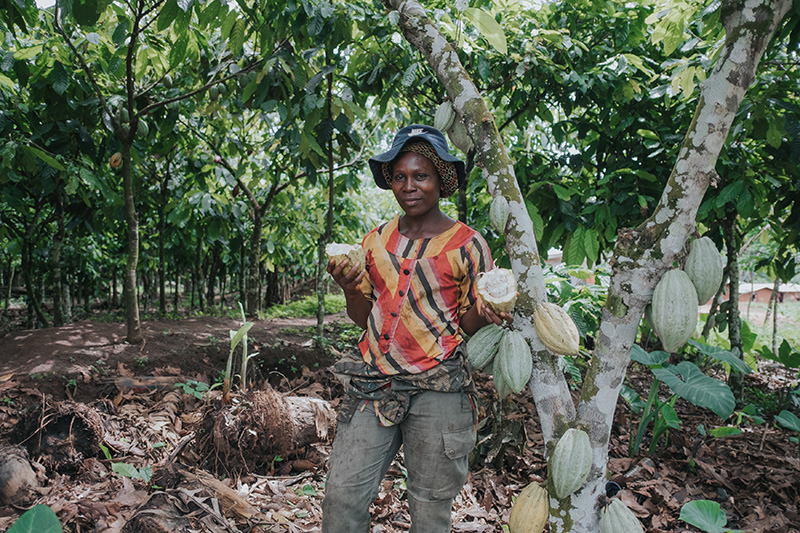
Ghana (Cocoa):
The Ghana Cocoa Traceability System (GCTS) supports hundreds of thousands of smallholder farmers by providing digital traceability, training and capacity -building. The system maps farms, tracks cocoa from farm to export, and helps farmers comply with evolving international sustainability and traceability requirements, including the European Union Deforestation Regulation (EUDR). By integrating smallholders into a national platform, the GCTS strengthens market readiness while improving transparency and resilience in the cocoa sector.

Malaysia (Palm Oil)
The Malaysian Sustainable Palm Oil (MSPO) certification scheme ensures sustainability and end-to-end traceability for all actors in the palm oil value chain, including smallholders. Independent smallholders are organized into clusters (SPOCs) and cooperatives (KPSMs), receiving training, support, and digital tools that make compliance affordable and scalable. The system links production data to buyers and regulators, reducing administrative burdens, improving due diligence, and helping smallholders participate in global markets.
These country experiences highlight how national systems can integrate smallholder support, traceability and market access, providing practical lessons.
How FACT Supports Smallholder Inclusion
FACT facilitates dialogue and peer learning among member countries to:
Share best practices on supporting smallholders within national sustainability frameworks;
Identify scalable approaches to inclusion across commodities and regions;
Strengthen alignment between sustainability goals, market expectations, and local realities.